Waste management is one of the biggest environmental challenges facing Peruvian cities. Lima, Arequipa, Trujillo, and other cities in the country generate thousands of tons of waste every day, most of which ends up in landfills or, worse still, in informal dumps. In this context, the circular economy emerges as a strategic option to change how we produce, consume, and manage resources. Its implementation represents not only an environmental commitment but also an economic opportunity for companies, local governments, and communities.
What Is the Circular Economy and How Can It Be Applied in Peru?
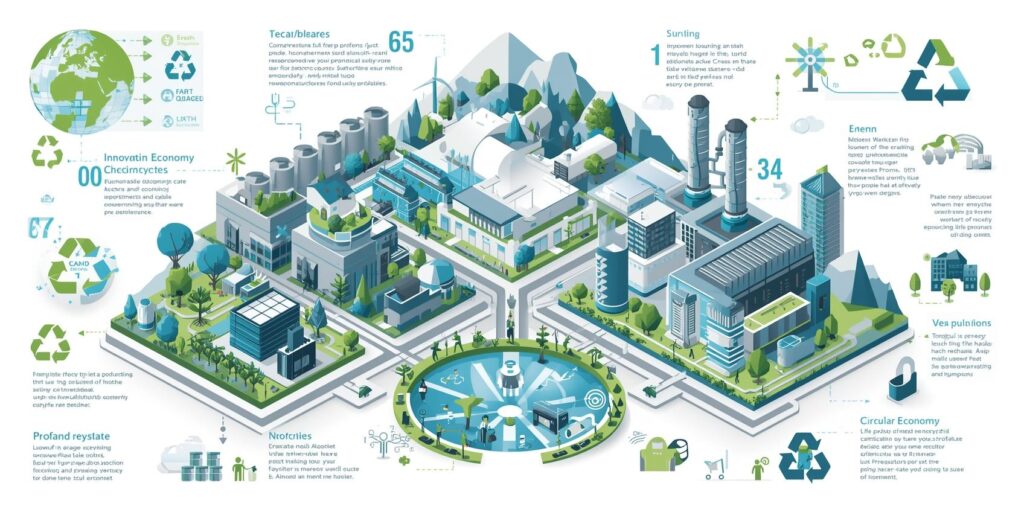
The circular economy is a model designed to replace the traditional “extract, produce, and dispose” paradigm with one based on reducing, reusing, repairing, recycling, and regenerating. Instead of treating waste as final disposal, it should be regarded as a resource capable of being reincorporated into production processes, generating economic and social value.
In Peru’s case, applying this approach involves reconsidering supply and consumption chains, promoting innovation in materials, waste separation at source, and investment in clean technologies. In fact, the MINAM (Ministerio del Ambiente – Ministry of the Environment) has promoted national strategies for waste management in Peru, encouraging partnerships among municipalities, companies, and citizens.
Sustainability consultancies play a crucial role in this transition, helping organizations design and implement business models based on circularity, regulatory compliance, and resource efficiency.
Sustainability Strategies in Peru: The Role of Business
Increasingly, Peruvian companies understand that sustainability is not a fad, but a competitive necessity. Implementing sustainability strategies in Peru reduces costs, enhances corporate reputation, and fulfills stricter environmental regulations.
Environmental management for companies in Peru has become a priority, as productive sectors must demonstrate that they operate under parameters of energy efficiency, responsible water use, and proper waste management. Through consulting on environmental regulations in Peru, companies can identify risks, adapt their processes to current legislation, and establish policies for continuous improvement.
In addition, Peru faces sustainability challenges for companies, e.g., informal waste disposal, a lack of recycling infrastructure, and limited environmental awareness. Conversely, these challenges also pose potential opportunities for innovation and public-private partnerships.
Key Sectors for the Circular Economy
- Construction:
Sustainability in Peru’s construction sector is advancing with the incorporation of recycled materials, modular design, and energy efficiency in buildings. Construction companies are implementing environmental impact management policies to minimize waste and reduce their carbon footprint. - Tourism:
Sustainable tourism is increasingly in demand. Environmental consulting for the tourism sector in Peru guides hotels, agencies, and operators to apply practices such as reducing plastic use, responsible water management, and organic waste recovery. - Retail:
In the retail sector, companies are implementing sustainable strategies focused on biodegradable packaging, product return programs, and reverse logistics systems. These actions strengthen their environmental commitment and improve consumer perception. - Transportation:
Sustainability in Peru’s transportation sector is essential to reducing greenhouse gas emissions. The modernization of fleets, the use of alternative fuels, and the implementation of renewable energies in Peru are fundamental steps toward cleaner urban mobility.
Waste Management Solutions in Peru
Proper waste management in Peru requires a comprehensive outlook that involves public policy, public education, and business participation. Municipalities should strengthen their selective collection systems and promote incentives for waste recovery.
Sustainable solutions for companies in Peru include the creation of composting plants, the installation of collection points, the reuse of industrial materials, and the integration of suppliers committed to the circular economy. These measures, along with sustainability consulting in Peru, enhance environmental performance indicators and contribute to fulfilling the Sustainable Development Goals (SDGs).
Likewise, environmental compliance for companies in Peru not only implies compliance with laws but also adopting a preventive outlook. Implementing environmental audits, sustainability reports, and energy efficiency programs are efficient tools for ensuring environmental respect and enhancing corporate transparency.
Forward to a Circular and Resilient Future
Adopting the circular economy in Peruvian cities means moving from reactive waste management to proactive management, where each waste product is transformed into raw material. It is a silent revolution that redefines the relationship between economic growth and environmental conservation.
Coordination between the State, enterprises, and citizens will be key to consolidating this model. With support from sustainability consulting in Peru, organizations can transition to a cleaner, more inclusive, and competitive economy that ensures well-being for future generations.
How to Comply with Environmental Regulations in Peru?
Complying with Peruvian environmental legislation requires knowledge of current regulations, the development of environmental management tools, and ensuring their proper implementation. An environmental consulting firm in Peru assists companies in preparing environmental impact studies, waste management plans, and compliance audits.
The journey toward a circular economy is not easy, but it is inevitable. Sustainability is no longer an option, but a strategic advantage that distinguishes responsible and visionary organizations.
For further information, contact us at contacto@vag-global.com or call +511 436 4612.